Welcome to the SonoWorld Elastography Minisite on ultrasound elastography principles, clinical applications, diagnosis and recent developments.
What’s a Minisite?
A minisite pulls together into one location all the resources within SonoWorld that match a keyword such as "elastography" or its close relatives such as "strain imaging" or "stiffness imaging". The content of this minisite is is the same as you can find by search in the main body of SonoWorld - it's just collected together here for your convenience. Everything on this minisite is focused on elastography or related in some way to elastography. The content includes lectures, news stories, cases, articles, whitepapers and many other resources that provide information on elastography, strain imaging and related technology.
So, what is Ultrasound Elastography?
Elastography, also know as elasticity imaging, stiffness imaging or strain imaging, is a dynamic technique that uses ultrasound to noninvasively assess the mechanical stiffness of tissue by measuring tissue distortion in response to external compression. Just as palpation can reveal the presence of a mass or hardening of tissue, elastography provides an ultrasound-based method to detect and display the relative stiffness of tissue within the body. Elastography provides an extra dimension that complements the existing imaging technology of gray scale and color Doppler imaging. While elastography can also be performed with MRI and CT, the portability and low cost of ultrasound makes it the logical choice for widespread application of elastography techniques in the clinical setting.
What equipment is required to do elastography?
High-end ultrasound systems today typically have elastography software packages that are included with the basic platform or can be added on later. In most cases the elastography capability is largely software based and the existing console and transducers can be used in the elastography exam with no special hardware required.
The elastographic information, the “elastogram”, may be mapped over the gray scale image much as color Doppler is displayed or it may be presented as a separate color or gray scale image.
There are multiple approaches used in elastography, and there are several proprietary technologies that are available from only a single manufacturer. The most widely used approach involves mechanical compression - use of the ultrasound transducer to briefly compress the underlying tissue. The elastography software then detects relative strain within the tissues in the field of view, and displays the resultant elastogram as a color overlay on the gray scale image or as a separate color or gray scale image shown side by side with the conventional ultrasound image. Another technique uses an external device to produce vibration in the tissue while still others rely on transmitted pulsations from nearby vessels to provide the mechanical compression.
What’s New in Elastography?
Relatively recent developments include real-time strain imaging, acoustic radiation force impulse (ARFI) imaging and shear wave velocity estimation to create the elastogram. The shear wave techniques hold out the potential for more precise quantification of elastographic data.
The technology of elastography is evolving rapidly. Fortunately, since it is largely a software-based technology, existing high-end systems are likely to continue to be upgradeable as new developments are released.
What are the Clinical Applications for Elastography?
Elastography is currently regarded as an adjunct tool for ultrasound diagnosis.
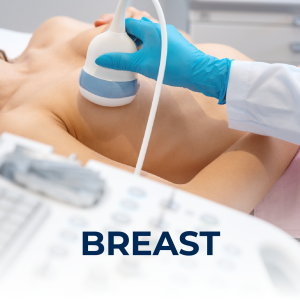
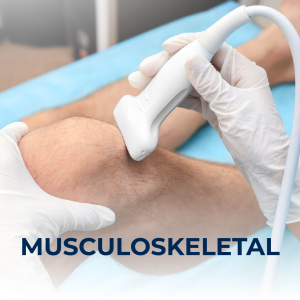
One of the earliest applications, and still the one with the most exciting potential for clinical impact, is breast lesion assessment. Many studies have shown that elastography can contribute to distinguishing cancer from benign lesions, and as the technology continues to evolve, we can expect this capability to steadily improve in the future. Other applications either established or in development include characterization of thyroid nodules, detection of lymph nodes containing metastatic disease, evaluation of liver disease, detection of prostate cancer, assessment of musculoskeletal structures for trauma, and assessment of soft tissue masses anywhere in the body. Other applications that appear promising include assessment of plaque and arterial wall evaluation, venous thrombus, graft rejection and monitoring of tumor ablation. Elastography has potential application in many specialties including radiology, ob/gyn, anesthesiology, orthopedics, and many others.
What is the Future of Elastography?
As the technology continues to improve and mature we can expect to see continuing development of new applications for this exciting technology. Because the technology is readily available from many manufactures of ultrasound equipment, the end user has the opportunity to participate in development of new clinical applications and refinement of existing protocols for use of elastography in clinical practice. Looking to the future, this technology will undoubtedly become an important tool in ultrasound diagnosis.